Caprine Ecological is proud to deliver targeted grazing services to Colorado’s front range. Our goats work to reduce fire risk, manage invasive species, and offer ecologically sustainable solutions for vegetation management.
Why targeted grazing?
We live in ecosystems that sustain human life and well being. In Colorado, we are lucky to have access to especially bountiful nature — but our interface with nature comes with risks and responsibilities.
A subdivision can be protected from fire-loading or invasive plants with indiscriminate application of defoliating pesticides. Increasingly, mass application of toxins like glyphosate is the first approach for vegetation management of federal and local governments.
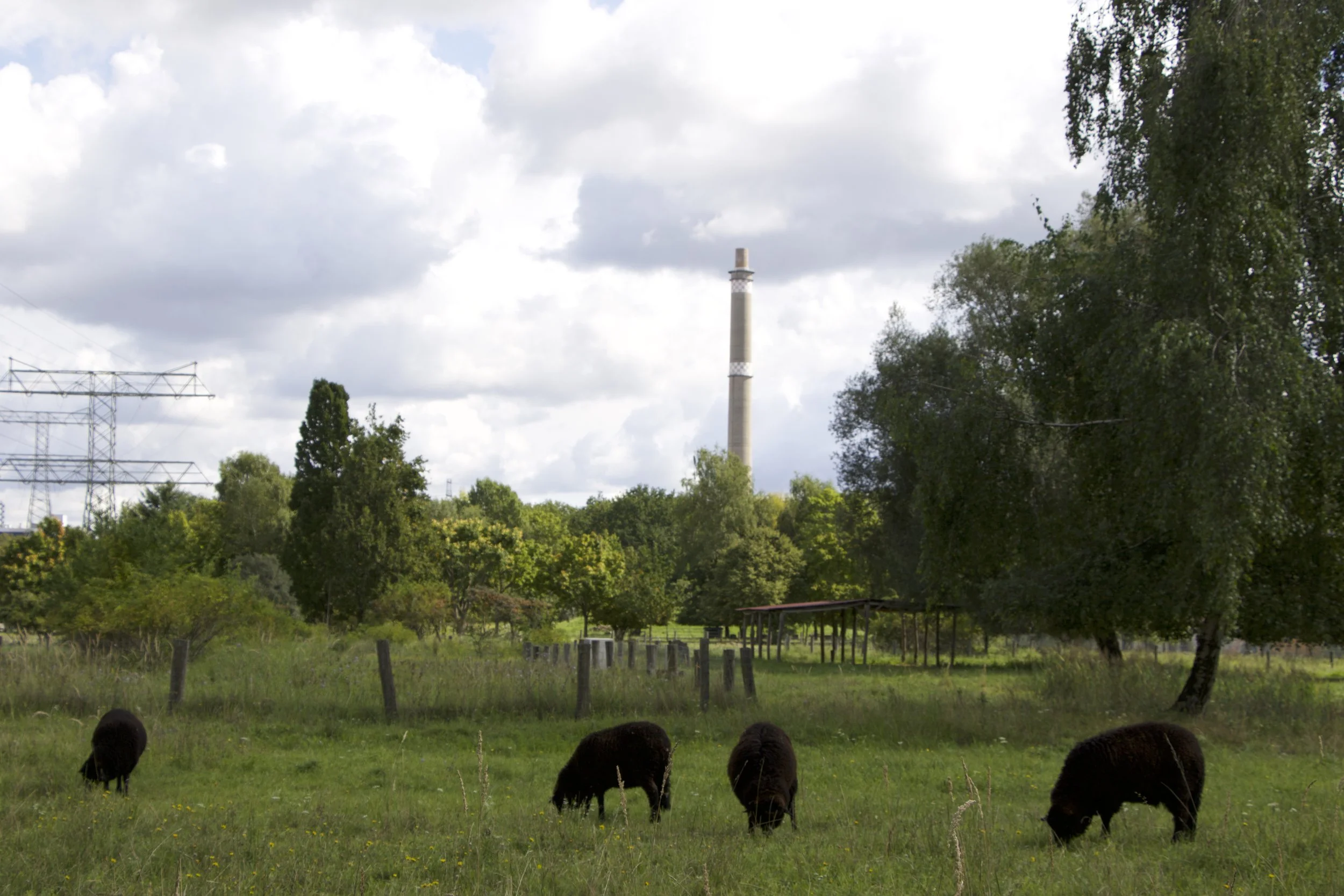
No one wants to lose their homes to fire or see native ecology disrupted, but we believe that spraying poison should be a last resort. Where vegetation overgrows due to a lack of natural grazers, we bring in livestock like sheep and goats to simulate a ecosystem-integrated intervention. Ruminants are vital in restoring disrupted soil cycles — rather than leaving tire treads or slash piles, they leave behind healthier, richer dirt.
Grazing for vegetation management is cost competitive with non-herbicide interventions such as mechanical removal, prescribed fire, or hand crews.
Although circumstances may vary, targeted grazing shines as a tool on rough terrain. Areas of concern that are populated with dense trees, steep slopes, or rocky soil are usually good candidates for targeted grazing.
What targeted grazing delivers
Nothing can entirely eliminate the risk of fire, but careful application of livestock provides many elements of a good fire-mitigation strategy:
Hoof action mixes fine fuels into the dirt
Animals browse shrubs and brush, reducing 10-hour fuel load
Grazing leaves “mosaic” pattern of defoliation, good for ecosystems and fire control
Forest grazing removes vines, shoots, and suckers, cutting off brush fires from easy access to the tree canopy
Manure improves moisture soil carbon and moisture retention
Just as important as the actual mitigation is the planning and monitoring around it. Whether you want to control a pest species or reduce fire fuel, you first need to understand the plant species being targeted, how to measure its growth, and how best to manage it.
Caprine Ecological can help you set a goal and create a plan for achieving it.
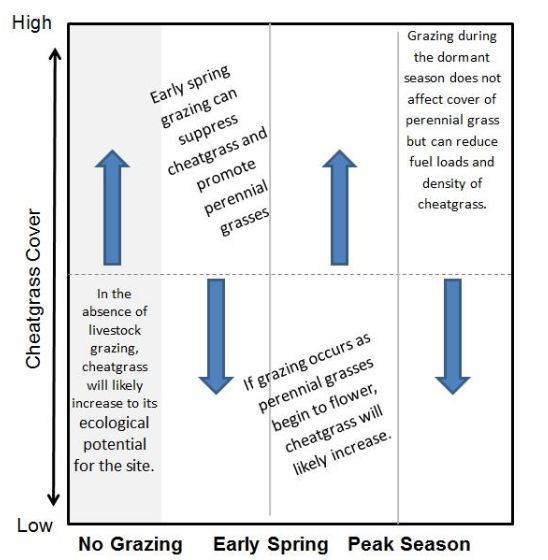
Timing is everything in good grazing management.
Strand, Eva K., et al. "Livestock grazing effects on fuel loads for wildland fire in sagebrush dominated ecosystems." (2014)
Contact Us
Ask us about our services, or request a free fire mitigation estimate